
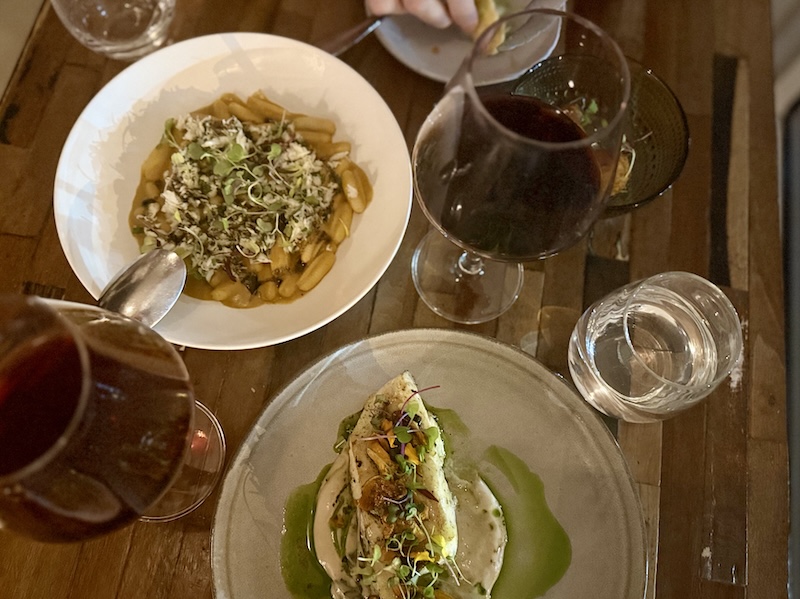
What is Basque cuisine? An ode to a region between northern Spain and southwest France. The dishes blend coastal seafood from the Cantabrian Sea with inland produce, meats, and dairy, with a focus on seasonal, top-quality ingredients above all else. Even the name “Edan” nods to the culture; it’s the Basque verb “to drink,” reflected in a Spanish-leaning wine list and pours of txakoli.
The menu offers several Pintxos, the Basque answer to tapas: bite-sized bar snacks you graze while hopping from one crowded counter to the next in the region. The ritual is social, fast, and driven by what looks freshest at the bar. Edan mimics this tradition in Miami with an eight-course tasting, although not quite the same as bar hopping. If that’s not for you, which it wasn’t for me, there’s also a modern, seasonal menu led by Basque chef Aitor Garate Berasaluze.
I couldn’t wait to dive in, starting with the Mushroom Croquettas.
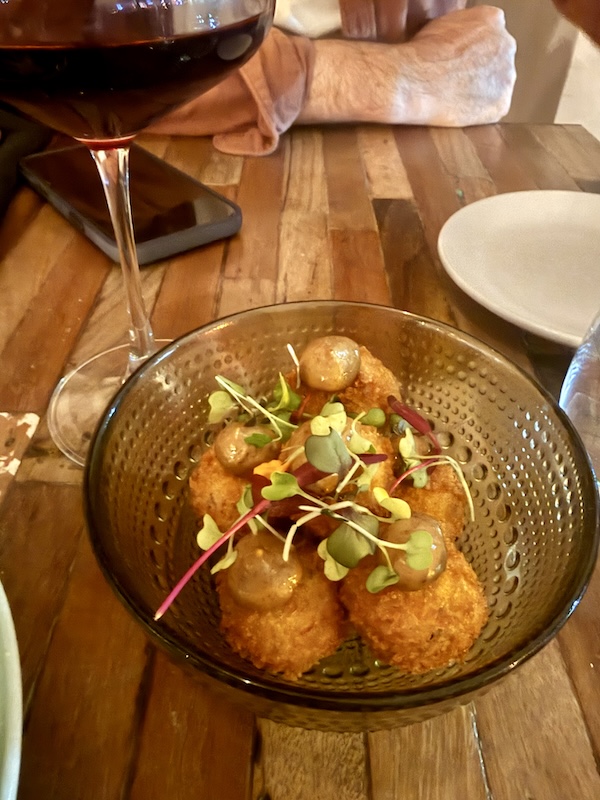
Five mushroom croquetas with black garlic emulsion and smoked shiitake. A safe choice that I am SO happy we got because these are some of the best croquetas we’ve had.
Gossamer-crisp shell, ultra-creamy center, and a finish that lingers with smoke. The filling leans on smoked shiitake for depth, while the black garlic emulsion you dip them in adds a molasses-like sweetness and gentle funk that makes the mushrooms taste even meatier. They’re rich but not heavy, the kind of croqueta that makes you want to eat them like popcorn.
Across Spain, croquetas are defined by a silken béchamel base – never mashed potato! – enriched with a featured ingredient. In the Basque Country, they often show up as pintxos, and are prized for an especially creamy interior and classic fillings like jamón, salt cod, or wild mushrooms. That mushroom angle is very Basque.
While the croquetas are a safe bet, we spiced it up a bit with the Scallop Cracker (also known as the Scallop Carpaccio).
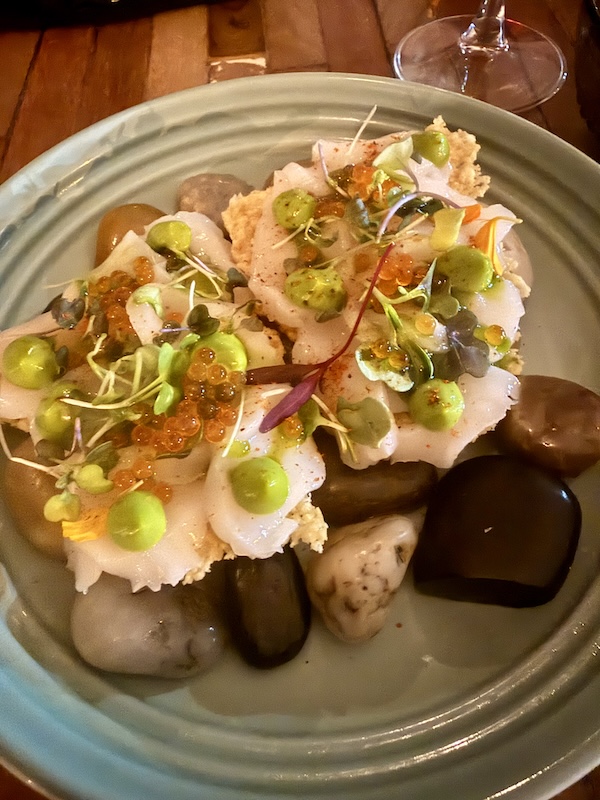
No matter the name, I was not prepared for the dish that arrived. Thinly sliced scallops are served with a Parmesan cracker, topped with smoked trout roe, espelette pepper, and a vibrant basil emulsion, on a bed of stones.
“It’s about contrast—the creamy scallop, crisp cheese, and aromatic emulsion,” says Chef Aitor Garate Berasaluze, blending tradition with personal and Basque influences. “This is amazing,” says me. WOW. Such a thoughtful dish where every ingredient counts.
Scallops melt on the tongue: sweet, delicately oceanic, and cool. The Parmesan cracker snaps underneath and brings a toasty, salty depth that frames the scallops without overpowering them. Smoked trout roe pops with gentle brine and a whisper of smoke. Espelette pepper adds soft, peppery warmth rather than heat, and the basil emulsion lifts everything with bright, herbaceous perfume. Each bite moves from crisp and savory to silky and sweet, then lands on citrus-green freshness. It’s rich but never heavy.
The “bed of stones,” as I so eloquently put it, is a smart theater with a purpose. The stones are typically chilled, which keeps the scallops cold and the cracker crisp by lifting them off the warmer plate surface. The spacing also prevents steam from softening the cracker. Visually, it nods to the shoreline, sea stones under raw shellfish, so the presentation matches the flavor: pristine, marine, elemental.
With this delectable start, you’re ready for something more filling. Malloreddus Pasta was just the dish.
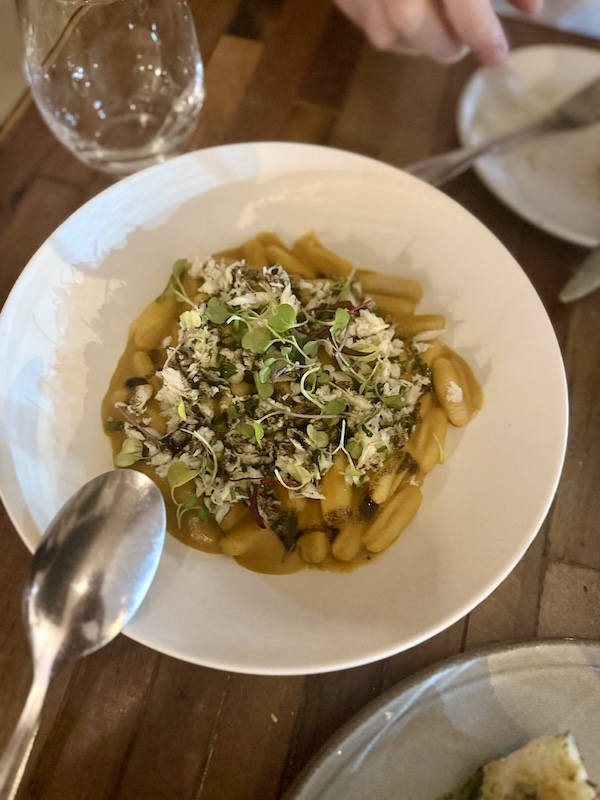
Malloreddus are small, ridged, grooved “little gnocchi” made from semolina and water (often with a touch of saffron). The ridges and hollow curve are designed to cling to sauces and catch small bits of garnish. They’re tossed with a sweet blue crab for an unexpected pasta dish.
Blue crab, it turns out, is a perfect fit. Its sweet, briny delicacy echoes seafood-driven Mediterranean cooking and complements saffron, citrus, and herb notes without overwhelming the pasta. It’s rich, but not too heavy. Tender shreds of crab slip into the grooves, so every bite delivers pasta, sauce, and crab together.
Malloreddus gives you sauce-holding architecture; blue crab provides sweet ocean depth. Together, the dish is plush, fragrant, and impeccably balanced. Be on the lookout though, it seems this one runs as a special and isn’t always available. Be sure to snag it if it is.
And no Basque meal is complete without fish. Enter the Grilled Branzino.

Though it isn’t the most traditional fish (Basque grills are famous for whole turbot, sea bream, sardines, and hake), it’s fresh for Florida. Here it is served with sunchoke purée and sweet potato chips.
Sunchoke purée is a silky mash made from sunchokes, also called Jerusalem artichokes. They’re knobby root vegetables from the sunflower family, not related to globe artichokes. The purée is slightly sweet and slightly nutty. It’s not bitter, rather almost floral. And perfectly buttery for a luxurious addition with the simple fish. Sweet potato chips add a crunch and bring it altogether, and you have an interesting dish for a traditionally clean and simple fish.
For those looking to try something a bit more flavorful, some of the other menu items sounded incredibly interesting. For example, Duck Magret & Radish or Lamb Rack with Cauliflower. Since I don’t eat these proteins, the Main’s menu didn’t work for me. I’d be happy to load up on more of the small plates here.
Now, no meal at Edan would be complete without the pièce de résistance: the Basque Cheesecake.
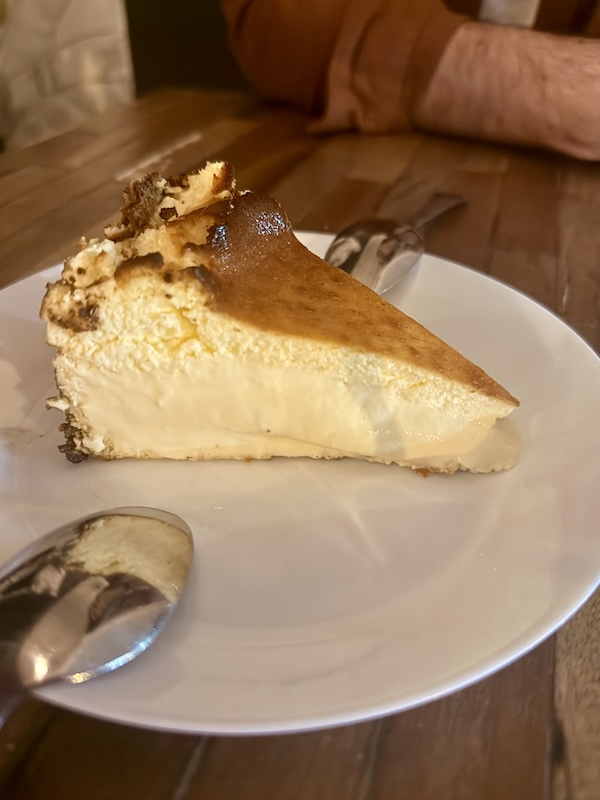
Basque cheesecake is basically cheesecake’s much better, cooler cousin.
At its core, it’s a very simple baked cheese custard: cream cheese, sugar, eggs, heavy cream, sometimes a spoon of flour. But the signature move is how it’s baked. Originating at La Viña in San Sebastián, it’s baked at a very high temperature so that the top goes deeply caramelized and “burnt” (on purpose), almost like the top of a crème brûlée. The edges set and hold a slice, but the center stays soft, custardy, sometimes almost oozy.
Flavor-wise, you get deep, caramelized, almost toffee-like notes from the dark top with a rich, tangy cheese center that’s not cloyingly sweet. The texture sits between baked cheesecake and a very thick custard. And no crust, so you just swim in that baked batter.
It’s perfect here, the perfect “grand finale.” It’s rich and indulgent, but the balance of tang and gentle bitterness keeps it from feeling heavy. So much so that I can imagine returning for just wine and Basque cheesecake, no mains needed.
Although there are certainly some small bites I wouldn’t mind coming back to!